The Two-Price Problem: What Instant Buy Apps Don't Show You
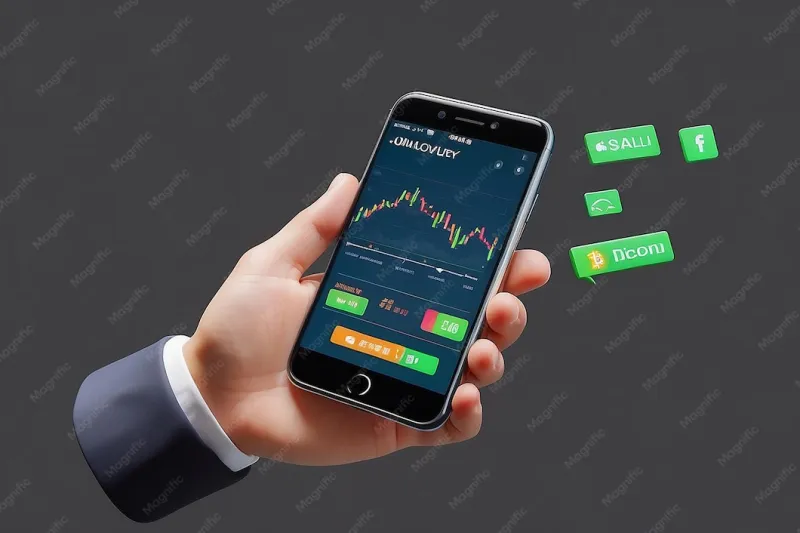
Photo: smartphone crypto trading app buy screen close up, via img.freepik.com
Here's a fun experiment: open your crypto app, pull up Bitcoin, and look at the price. Now open a real market feed — Coinbase's advanced view, Binance.US, even just CoinGecko — and compare. If you're on an instant-buy screen, there's a decent chance the number staring back at you is a little... optimistic. Not by much. Maybe half a percent. Maybe two. But it's there, and it's coming out of your pocket every single time you tap "Buy."
This is the spread — arguably the least understood cost in retail crypto, and one that no receipt will ever show you.
Wait, Isn't Trading Supposed to Be Free?
A lot of popular apps advertise zero commissions, and technically that's true. You pay no fee line item. But the app isn't a charity. Instead of charging you a fee, it marks up the price. You think you bought Bitcoin at $67,400. You actually bought it at the market rate of $67,150, and the difference went to the platform. The fee exists — it's just invisible, folded into the price like a resort fee baked into your hotel rate.
The mechanics are simple. When you hit instant buy, the app fills your order from its own inventory or from a liquidity partner, at a price it controls. Nobody's forcing a competitive auction on you. The quote you see is the quote you get, take it or leave it. And because it's never itemized, most people never realize they're paying anything at all.
The Side-by-Side Nobody Shows You
Let's make it concrete. Say you want $500 of Bitcoin.
- Instant buy: You're quoted one all-in price. At a 1% spread, $5 of your $500 evaporates before your order even settles. You receive slightly less BTC than the market rate implies.
- Limit order on the same platform's pro interface: You set your price, the order sits on the book, and you typically pay the actual trading fee — often 0.4% or less, sometimes a fraction of that. Same $500, same asset, and you keep roughly $3 to $4 more per trade.
Three or four dollars doesn't sound like much. Zoom out.
The DCA Death by a Thousand Cuts
Plenty of Americans dollar-cost average — $200 every payday, say. Twenty-six buys a year at a 1% spread is about $52 gone annually. Over a decade of steady investing, you're not just losing the spread dollars themselves; you're losing every dollar those spreads would have compounded into. At Bitcoin's historical returns, that $52 a year could plausibly have grown into well over a thousand dollars by year ten. You paid a five-figure-influence tax for the convenience of one button instead of two.
And the spread isn't always a flat 1%. It varies by asset, by volatility, sometimes by time of day. Meme coins and small caps on instant-buy screens can carry spreads of 2% or worse — precisely the assets retail traders gravitate toward.
How to Route Around It
The fix isn't switching apps (though comparing platforms helps — our exchange reviews dig into fee schedules in detail). The fix is changing how you trade:
- Use the pro or advanced interface. Nearly every major US exchange — Coinbase, Kraken, Crypto.com — offers a full trading view alongside the friendly instant-buy screen. Same account, same dollars, radically different cost structure.
- Place limit orders, not market orders. Set your price at or slightly below the current bid. If it doesn't fill in a few minutes, nudge it. On liquid pairs like BTC and ETH, fills usually happen fast.
- Check the actual fee tier. Limit orders that add liquidity to the order book often cost less than market orders. You get paid (in savings) for being patient.
- Automate carefully. Some recurring-buy features still route through the spread. If your platform charges a flat fee for recurring purchases instead, do the math — flat fees usually win at larger amounts.
A Fair Caveat
Instant buy exists for a reason. If you're moving $50 once a year, the spread costs you fifty cents and the simplicity is worth it. Spreads are a convenience product, and convenience products aren't scams. The problem is scale: the more you trade, the more the invisible markup compounds, and the less justified the convenience becomes.
The bottom line: in crypto, the price you're quoted and the price the market pays are two different numbers. Once you can see both, you'll never unsee the gap — and your long-term returns will quietly thank you for closing it.