Your Keys, Your Problem: A No-Drama Guide to Taking Your Crypto Off Coinbase
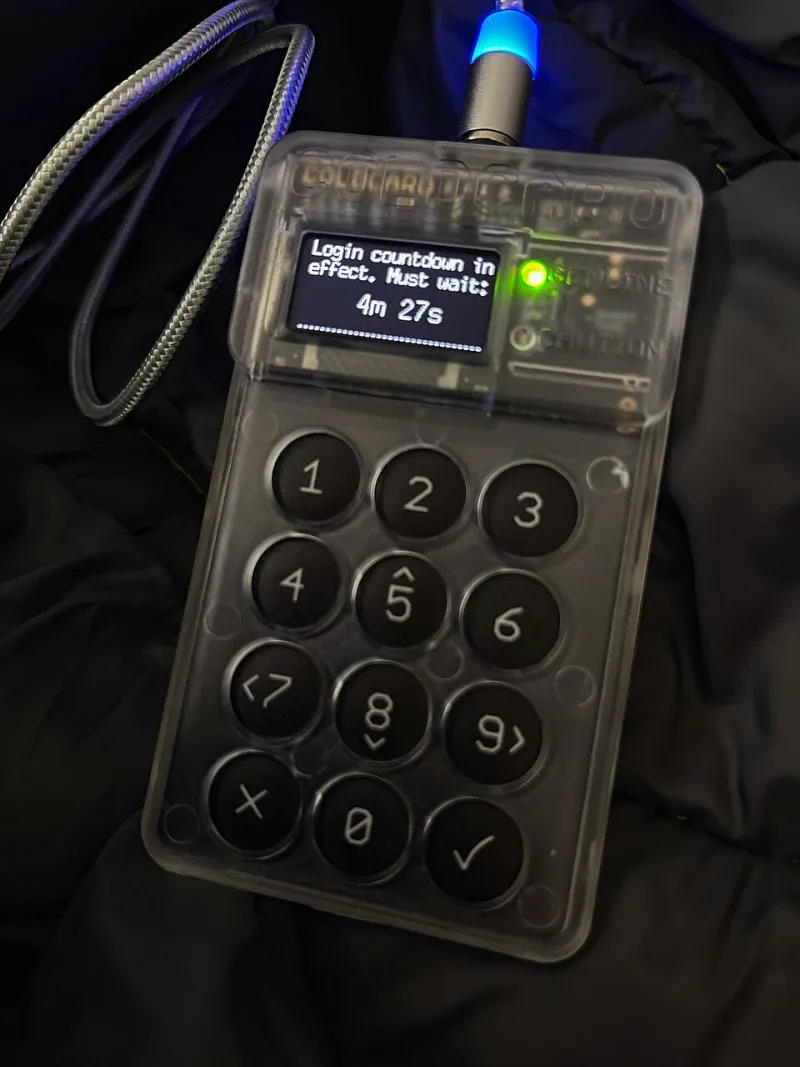
Photo: Tony Webster, CC BY 2.0, via Wikimedia Commons
Let's start with the uncomfortable truth: if you bought crypto on Coinbase, Kraken, or Gemini and never moved it, you don't own crypto. You own an IOU. The exchange holds the keys, and you're trusting a company — plus its cybersecurity team, plus its banking partners — to stay solvent.
For most people, that tradeoff has been fine. Until it isn't. FTX taught that lesson the hard way, and plenty of customers at smaller platforms never got whole. So if you've been meaning to learn self-custody but the jargon scared you off, this one's for you.
What a Hardware Wallet Actually Is
Strip away the marketing and a hardware wallet is just a small device — think a USB stick with a screen — that stores the private keys that control your crypto. Your coins never live on the device. They live on the blockchain. The device just holds the key that lets you move them.
Popular options in the US include Ledger, Trezor, and a few others in the $60–$150 range. Buy directly from the manufacturer's website, not Amazon third-party sellers and definitely not eBay. Tampered devices are rare, but why gamble?
The Seed Phrase: Twelve Words That Are Everything
When you set up your wallet, it generates a recovery phrase — usually 12 or 24 random words. This is the actual key. Lose the device? The words restore your wallet. Lose the words? Your crypto is gone forever. Someone steals the words? Your crypto is gone forever, faster.
Here's the practical version of seed phrase security:
- Write it on paper. Never photograph it, type it into your phone, or store it in a notes app. Cloud backups get hacked.
- Store it somewhere you'd keep a passport or a car title. A fireproof box, a safe, a locked drawer that only you access.
- Never share it with anyone. Not support agents (real ones never ask), not "verification" websites, not the friendly DM offering to help you set it up. Every seed phrase scam follows this script.
That's it. You don't need to bury titanium plates in the backyard. A piece of paper in a safe covers 99% of the realistic threat model for a retail investor.
The Actual Transfer, Step by Step
- Set up the wallet offline, following the manufacturer's guide, and write down your seed phrase.
- Send a small test amount first — $50 of Bitcoin, say — from your exchange to the wallet's receive address.
- Confirm it arrived. Then, as a genuinely paranoid-but-smart move, delete the wallet and restore it with your seed phrase to prove your backup works.
- Transfer the rest, in a few chunks rather than one giant move, so mistakes cost you sleep, not your savings.
Double-check the first and last four characters of every address. Clipboard malware is real, and a wrong address means your funds are gone with no customer service line to call.
The Honest Tradeoffs Nobody Puts in the Brochure
Self-custody means you are the fraud department. Click a malicious link and sign a bad transaction? No chargebacks. Lose your seed phrase? No password reset. That responsibility is real, and it's why keeping a small trading balance on an exchange is perfectly reasonable.
A sensible split for many US investors: the long-term holdings you're not touching live in cold storage, while the money you actively trade stays on an exchange for convenience. You don't have to pick a tribe.
The counterweight, of course, is that exchanges fail, freeze withdrawals, and get hacked — sometimes all at once. Convenience has a price too; it's just quoted in risk instead of fees.
The Bottom Line
Moving coins off an exchange isn't paranoia; it's the digital equivalent of not keeping your life savings in a stranger's glovebox. Start small, test everything, and accept that an hour of setup buys you the only kind of ownership crypto ever promised: keys that are actually yours.